 English
 Esperanto
  Afrikaans
  Català
  שפה עברית
  Cymraeg
  Galego
  Latviešu
  icelandic
  ייִדיש
  беларускі
  Español
  Português
  русский
  Français
  日本語
日本語  Deutsch
  tiếng Việt
  Italiano
  Nederlands
  ภาษาไทย
  Polski
  한국어
한국어  Svenska
  magyar
  Malay
Malay  বাংলা ভাষার
  Dansk
Dansk  Suomi
Suomi  हिन्दी
  Pilipino
  Türkçe
  Gaeilge
  العربية
  Indonesia
  Norsk
Norsk  تمل
تمل  český
český  ελληνικά
  український
  Javanese
  فارسی
فارسی  தமிழ்
தமிழ்  తెలుగు
  नेपाली
  Burmese
  български
  ລາວ
ລາວ  Latine
  Қазақша
  Euskal
  Azərbaycan
  Slovenský jazyk
  Македонски
  Lietuvos
  Eesti Keel
  Română
  Slovenski
  मराठी
मराठी  Srpski језик


How Do Fire-Rated Doors Work to Protect Lives and Property?
Fire safety is one of the most critical aspects of modern building design, and fire-rated doors play a vital role in slowing the spread of flames, smoke, and toxic gases during emergencies. This article provides a comprehensive explanation of how fire-rated doors work, their construction principles, material technologies, classification standards, and application scenarios. It also introduces the different types of fire-rated doors, including steel, stainless steel, wood, steel-frame wood, and fire-rated glass doors.
As a professional manufacturer, Mingjue is dedicated to delivering high-performance fire-rated door solutions that meet international standards, ensuring safety, durability, and architectural adaptability across residential, commercial, industrial, and municipal projects.
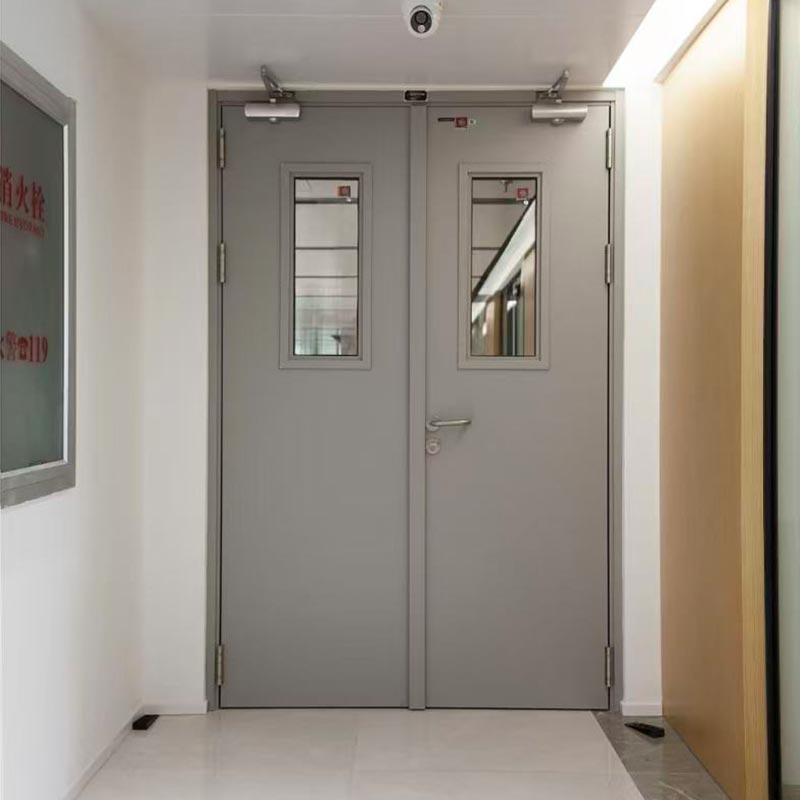
Table of Contents
1. Introduction to Fire-Rated Doors
Fire accidents can escalate within minutes, making containment systems essential in building design. Among these systems, fire-rated doors serve as a passive fire protection component designed to compartmentalize fire and prevent its spread between rooms or zones.
Unlike ordinary doors, fire-rated doors are engineered with specialized cores, fire-resistant seals, and reinforced frames. They are tested under extreme conditions to ensure they can withstand fire exposure for a specified period, typically ranging from 30 minutes to 240 minutes.
At Mingjue fire-rated doors manufacturer, advanced engineering and strict quality control ensure every door contributes effectively to building safety and compliance.
2. How Fire-Rated Doors Work
Fire-rated doors operate based on three core safety mechanisms:
2.1 Fire Resistance Barrier
The primary function is to block or slow down flames using fire-resistant materials such as steel, gypsum cores, mineral cores, or treated wood. These materials are designed to maintain structural integrity under high temperatures.
2.2 Smoke Containment System
Smoke inhalation is one of the leading causes of fatalities in fires. Fire-rated doors include intumescent seals that expand when exposed to heat, sealing gaps and preventing smoke leakage.
2.3 Heat Insulation Effect
High-quality fire-rated doors reduce heat transfer from one side to another, protecting evacuation routes and adjacent rooms from temperature escalation.
Together, these mechanisms buy crucial time for evacuation and emergency response.
3. Materials and Structural Design
Fire-rated doors are engineered with multi-layer structures. The selection of materials directly determines their fire rating performance.
The frame, hinges, and locking systems are also reinforced to prevent deformation during fire exposure.
4. Fire Rating Standards and Testing
Fire-rated doors must comply with strict national and international standards. These include:
Testing procedures include:
- Exposure to controlled fire conditions
- Measurement of temperature resistance
- Structural integrity assessment
- Smoke leakage evaluation
All Mingjue fire-rated doors are rigorously tested to ensure compliance and reliability.
5. Key Benefits of Fire-Rated Doors
These benefits make fire-rated doors a mandatory component in modern construction projects.
6. Applications in Different Industries
Fire-rated doors are widely used across multiple sectors:
7. Comparison Table of Fire-Rated Door Types
| Type | Fire Resistance | Durability | Aesthetic Appeal | Best Use Case |
|---|---|---|---|---|
| Steel Fire-Rated Door | Very High | Very High | Medium | Industrial & Warehouses |
| Stainless Steel Door | High | Very High | Medium | Hospitals & Coastal Areas |
| Wood Fire-Rated Door | Medium | Medium | High | Residential & Hotels |
| Glass Fire-Rated Door | Medium | Medium | Very High | Modern Offices & Malls |
8. Installation and Maintenance Guide
Proper installation is essential for fire-rated performance. Key steps include:
Maintenance is minimal but should include periodic checks for damage or wear.
9. Common Mistakes to Avoid
10. FAQ
Q1: How long do fire-rated doors last in a fire?
Depending on the rating, they can resist fire from 30 to 240 minutes.
Q2: Are fire-rated doors required by law?
Yes, in most commercial and public buildings, fire-rated doors are mandatory.
Q3: Can fire-rated doors be customized?
Yes, Mingjue offers customization in size, color, material, and design.
Q4: Do fire-rated doors block smoke?
Yes, they include intumescent seals to reduce smoke leakage.
Q5: What maintenance is required?
Minimal maintenance such as checking seals, hinges, and door alignment is recommended.
11. Conclusion
Fire-rated doors are not just architectural components—they are life-saving systems designed to contain fire, protect occupants, and minimize damage. Their advanced engineering, strict compliance standards, and material innovation make them essential in modern construction.
As a trusted manufacturer, Mingjue continues to innovate and deliver high-performance fire-rated door solutions tailored for diverse global applications. Whether for residential safety or large-scale infrastructure, Mingjue ensures reliability, durability, and superior fire protection.
If you are looking for certified, customizable, and high-quality fire-rated doors, Mingjue is your trusted partner for safety and excellence.
Contact us today to get professional consultation, customized solutions, and competitive quotations for your fire-rated door projects.
Previous:What are Aluminum Windows and Doors?
Send Inquiry
-
E-mail
X
We use cookies to offer you a better browsing experience, analyze site traffic and personalize content. By using this site, you agree to our use of cookies.
Privacy Policy